Text & source
יהוה
the four-letter Name; traditionally unpronounced, read aloud as Adonai
The Tetragrammaton: the ineffable Name of God (the Eternal)
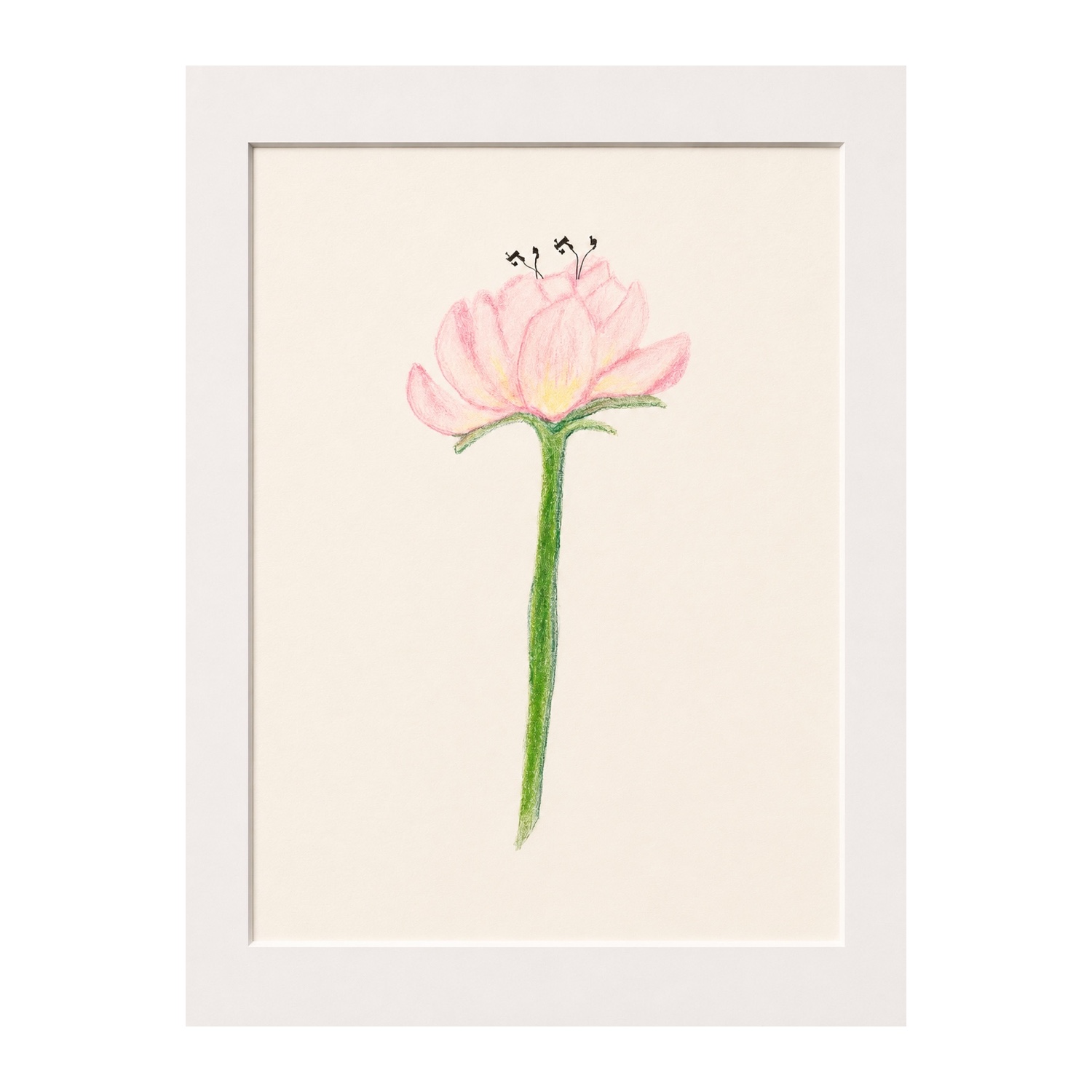
Source: The Divine Name, written here as the flower's reproductive center. On "black fire on white fire," see Jerusalem Talmud, Shekalim 6:1 · תלמוד ירושלמי שקלים ו׳:א׳.
At the center of this peony, where the reproductive organs would be, I have written יהוה. The Name is not a label set above the flower. It grows from inside the bloom, the emanation that keeps it alive. But the exchange runs both ways. The flower could not open without the Name, and the Name could not take on a body without the flower. For God to be present in the world, the world has to exist, and we have to look at it closely enough to notice what a body adds: color, desire, fragrance, vulnerability, a life that lasts only a little while.
I think, too, about everything that shapes a living form and never shows up in the drawing: what we inherited, what we were taught, what we let ourselves keep looking at. I find real wisdom in shmirat einayim, the guarding of the eyes, though I do not believe the sight of another person is itself a danger; attraction and objectification are not the same act. The tradition pictures Torah as black fire written on white fire (Yerushalmi Shekalim 6:1 · תלמוד ירושלמי שקלים ו׳:א׳). I keep thinking of the white fire as everything that is present but unseen: the conditions that let the visible flower bloom at all.