And Aaron Was Silent
“And Aaron was silent.” — Leviticus 10:3
The essay
Nadav and Avihu, Aaron’s sons, are gone, struck down in the very space where closeness to God was supposed to dwell. The verse does not describe Aaron’s grief. It does not record a cry, a protest, or a prayer. It gives us only this: silence.
Chazal refuse to read that silence as emptiness. The Sifra teaches that Aaron’s silence was rewarded with speech: because he did not respond, God later speaks directly to him (Sifra, Shemini 1:7). Another midrash sharpens the claim. Aaron wanted to speak. He had words. He restrained them, and in that restraint surpassed even Moses (Vayikra Rabbah 12:2).
This is not numb submission. It is silence chosen under unbearable weight. Aaron does not theologize, justify, or defend God. He stands.
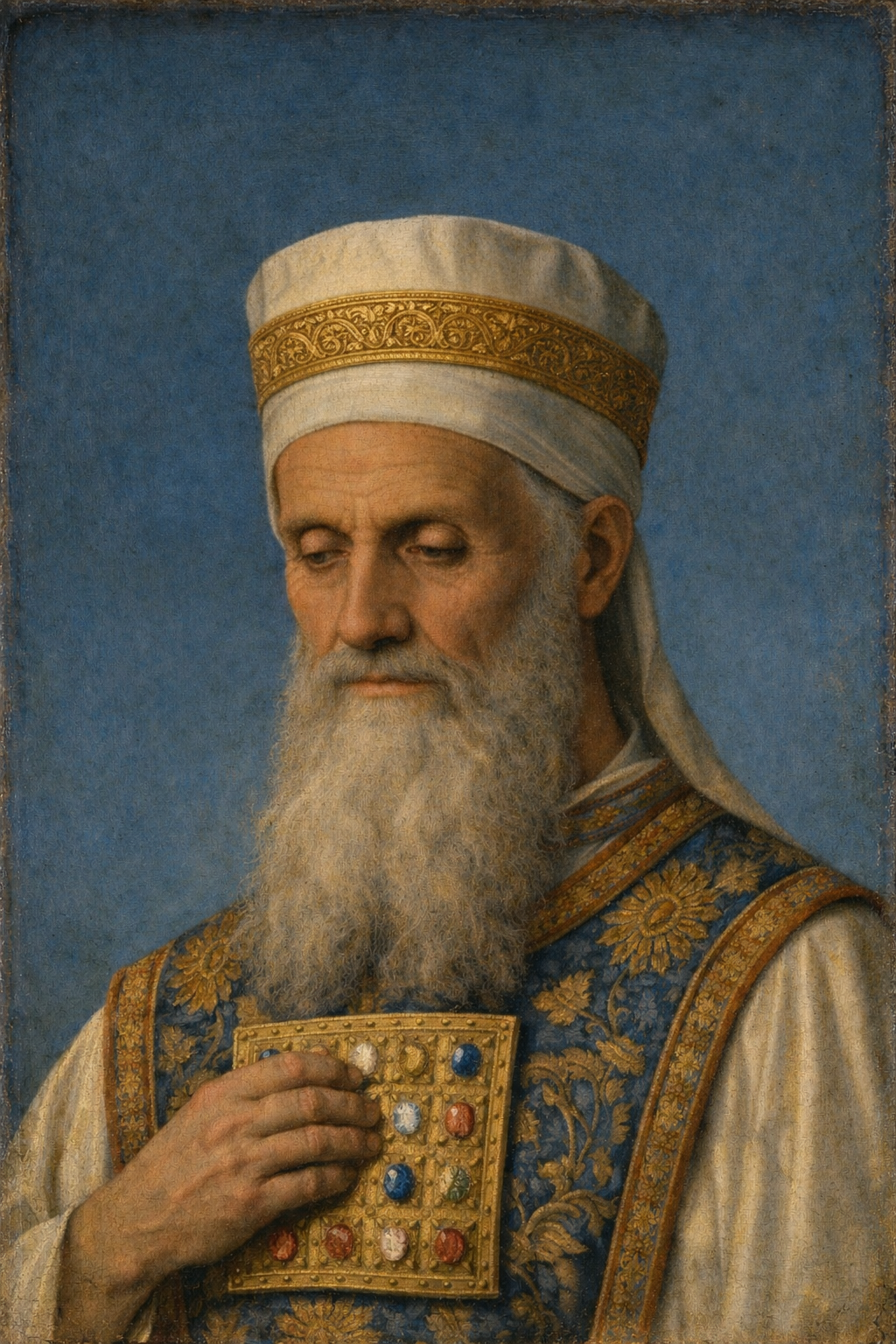
The visual language of ceremonial authority becomes the burden of priesthood; public stillness carries private grief. Bellini’s figures do not emote. They endure.
Chazal do not praise Aaron for understanding. They praise him for not rushing to speak. When words fail, do we fill the space, or let silence carry what language cannot?
Visual conversation
The portrait draws on Giovanni Bellini’s Portrait of Doge Leonardo Loredan (c. 1501–1504): a frontal pose, even light, and a face rendered with inward gravity.
Learning questions
When does silence communicate presence?
When can silence conceal what needs to be said?
What might responsible pastoral presence look like when answers fail?
Process note
This VisualMidrash work may use AI-assisted image-making as part of a directed artistic process. It is an interpretive image, not a documentary photograph, archaeological reconstruction, or claim about the historical appearance of biblical figures.