Text & source
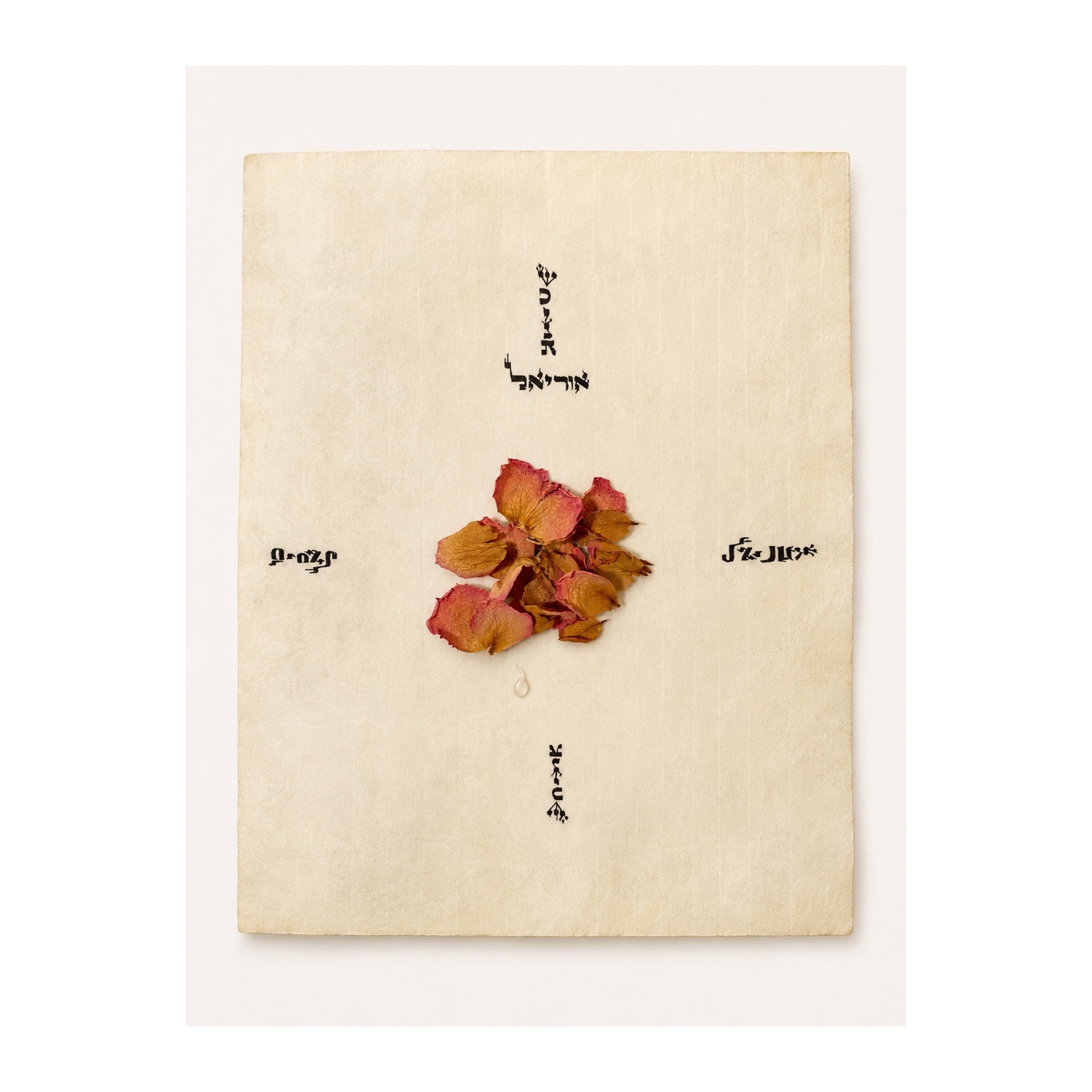
מִיכָאֵל · גַּבְרִיאֵל · אוּרִיאֵל · רְפָאֵל
Michael · Gavriel · Uriel · Refael
the four guardian angels
Source: The rose among thorns (Zohar, Introduction 1a · ספר הזהר, הקדמה א׳); the four guardian angels of the bedtime Shema ("on my right Michael, on my left Gabriel, before me Uriel, behind me Raphael", liturgical, plain text). The rose is real and intentionally decaying.
This piece grew out of the Zohar's rose among the thorns, guarded by its five strong leaves (Zohar 1:1a · ספר הזהר, הקדמה א׳), set beside the old bedtime invocation of the guarding angels. I do not read the rose as one fixed symbol. I read it as the generative, receptive capacity in all of us: the part that makes new things and has to be protected and nurtured to survive. The angels' names stand around the flower the way thorns stand around a rose. The thorns are not in the way of the life. The life is only worth living through them, not in spite of them.
A drop of white wax fell beneath the petals by accident and settled into the shape of a single sperm reaching an egg; I left it there. The rose itself was real, and it has since dried and broken apart from being carried and moved, and I will not stop that. The angels do not keep the flower safe by keeping it from being mortal, much as I do not believe God reaches in to stop our lives from running their course. I have come to think protection means presence far more than it means prevention.