Text & source
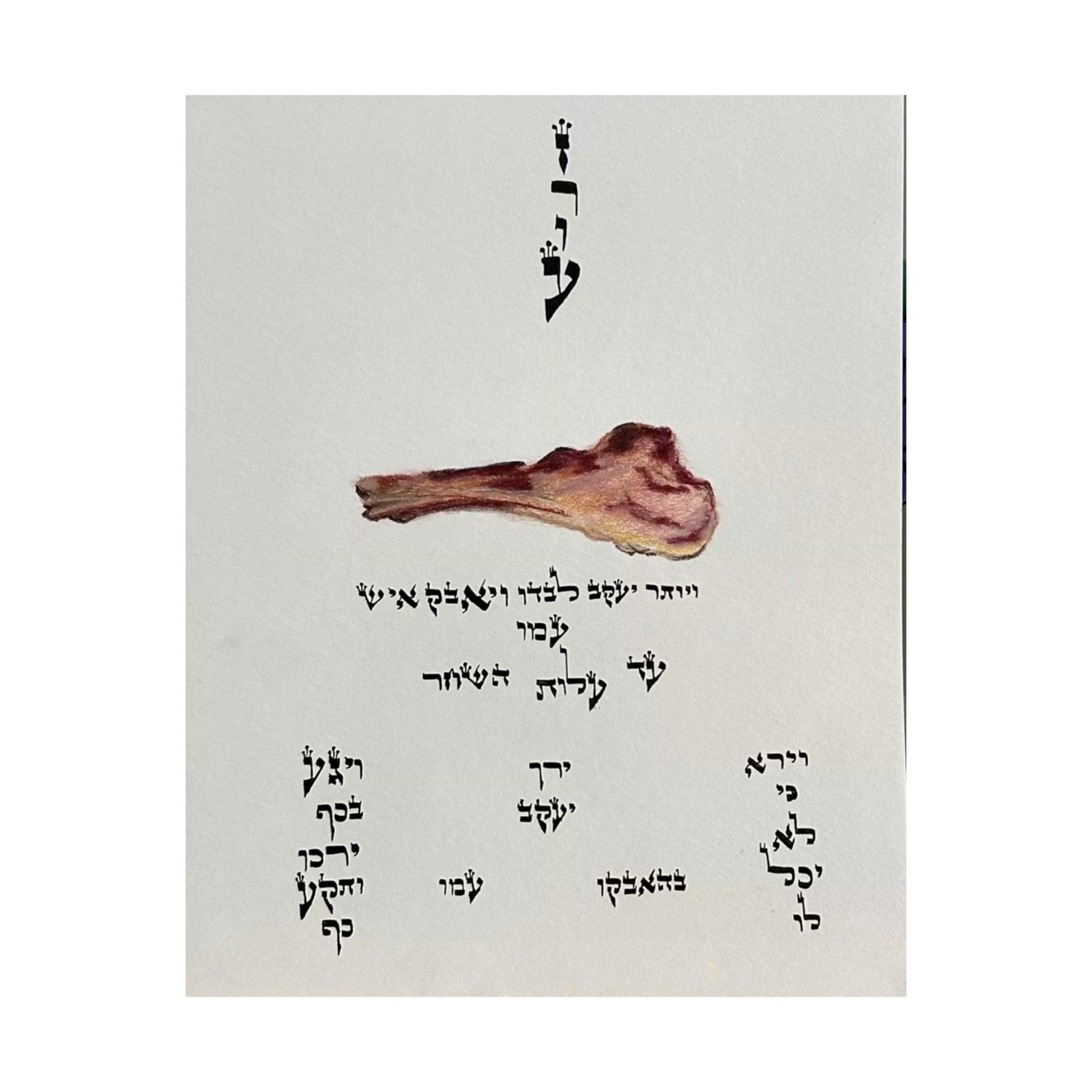
זְרוֹעַ · וַיִּוָּתֵר יַעֲקֹב לְבַדּוֹ וַיֵּאָבֵק אִישׁ עִמּוֹ
zeroa · va-yivater Yaakov l'vado, va-ye'avek ish imo
"arm / shank bone" · "Jacob was left alone, and a man wrestled with him."
Source: The Passover shank bone and the "outstretched arm" (Deuteronomy 26:8 · דברים כ״ו:ח׳); Jacob at the Jabbok (Genesis 32:25 · בראשית ל״ב:כ״ה) and the sinew of the thigh, gid ha-nasheh (Genesis 32:33 · בראשית ל״ב:ל״ג).
The Passover shank bone, זרוע, holds two meanings at once: the paschal offering, and the outstretched arm, זרוע נטויה, by which God brought Israel out of enslavement and lost agency. Around it I have set fragments of Jacob's night of wrestling. Jacob comes away with a new name and also with a limp. The encounter stays in his body, and the whole people goes on remembering it in the flesh through the mitzvah of not eating the גיד הנשה, the sinew of the thigh.
This work is about injury, and about the scars that can stay with us after we have come close to God. I do not want disability to be a tidy metaphor, and I do not believe suffering is secretly a gift. And yet the same God who reaches into history to set a people free is the God Jacob wrestles, and walks away wounded from. Maybe faith is the willingness to stay in that relationship without pretending the wound away. Some freedom, it turns out, is the kind you carry with a limp.