top of page

Selected Works
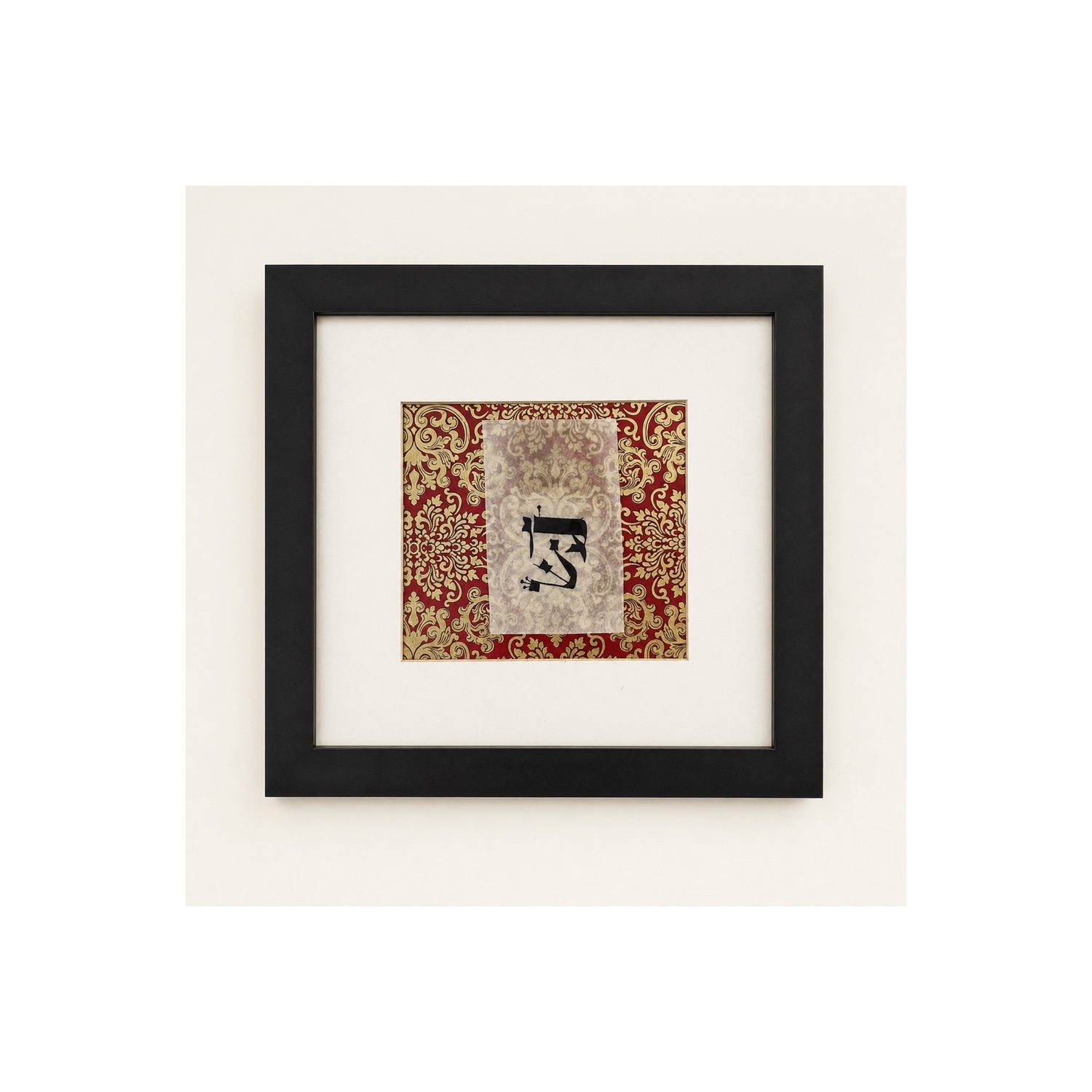
The Hebrew letters of kadosh extend and share strokes until the word becomes one concentrated black form.

Kadosh

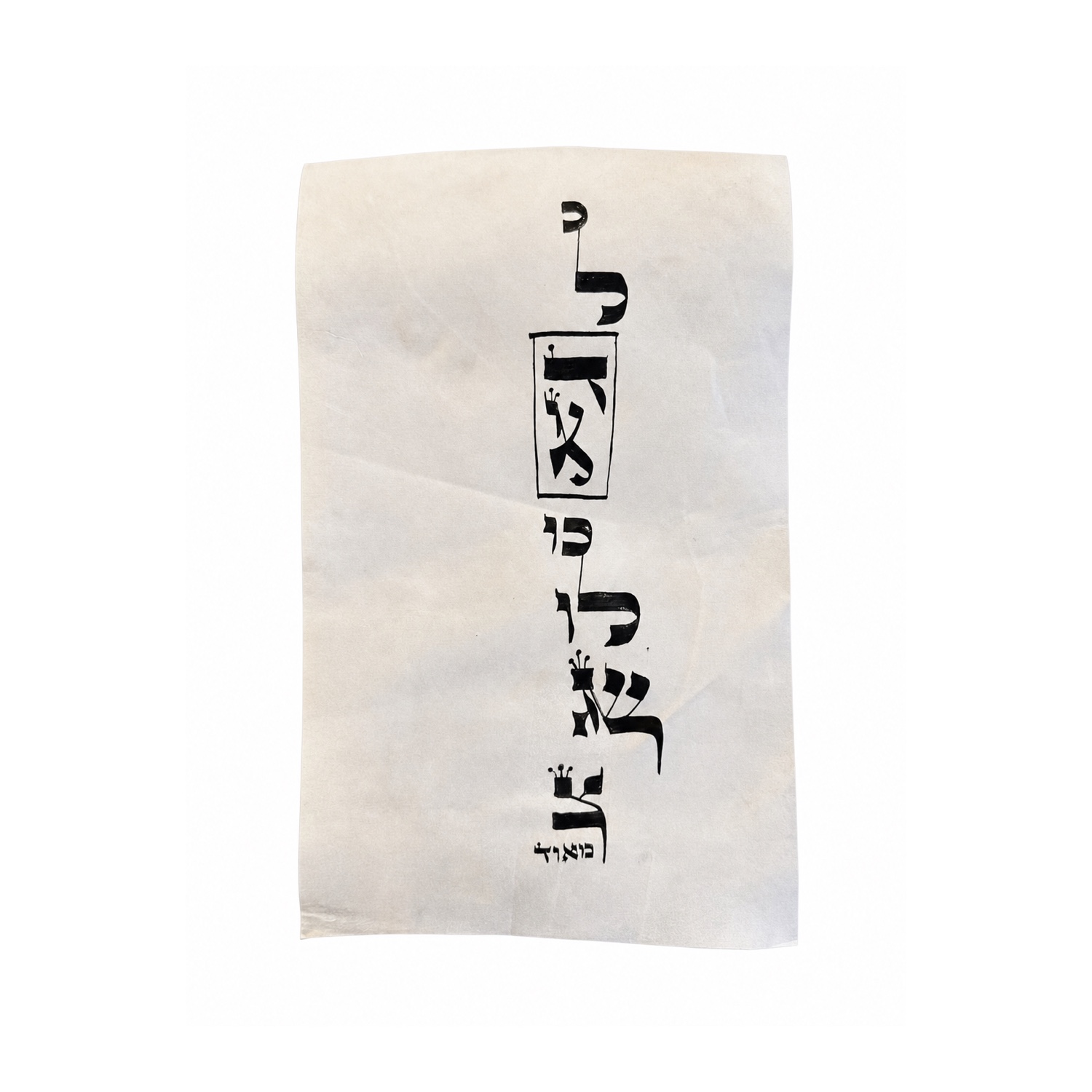
The Hebrew words for “the whole world is a very narrow bridge” descend in a single thin column, with strokes that share and stretch into the form of a bridge.

Kol Ha-olam Kulo Gesher Tzar Me'od

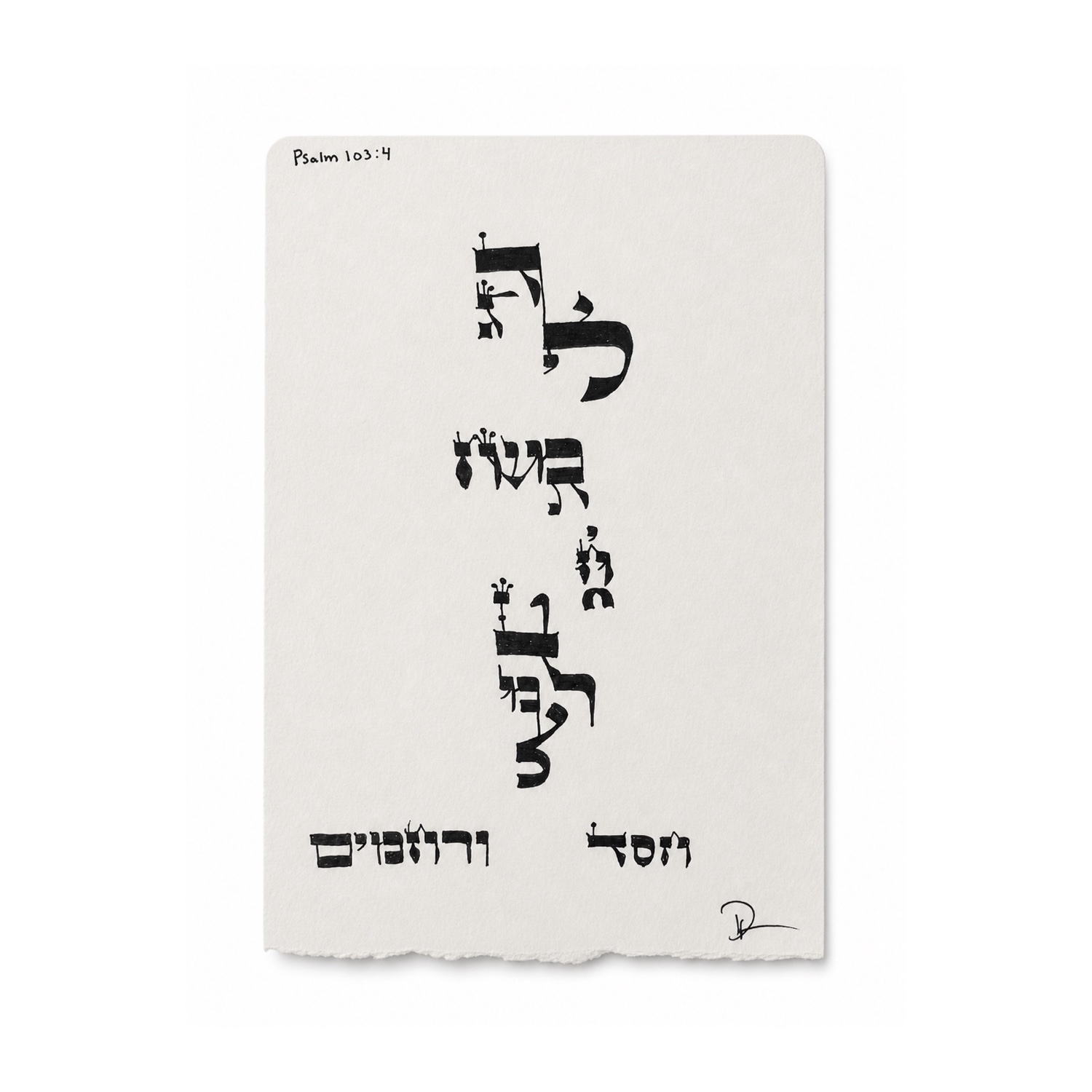
The Hebrew words of Psalm 103:4 share strokes and fall unevenly down the page in an abstract fused-letter composition.

Psalm 103:4

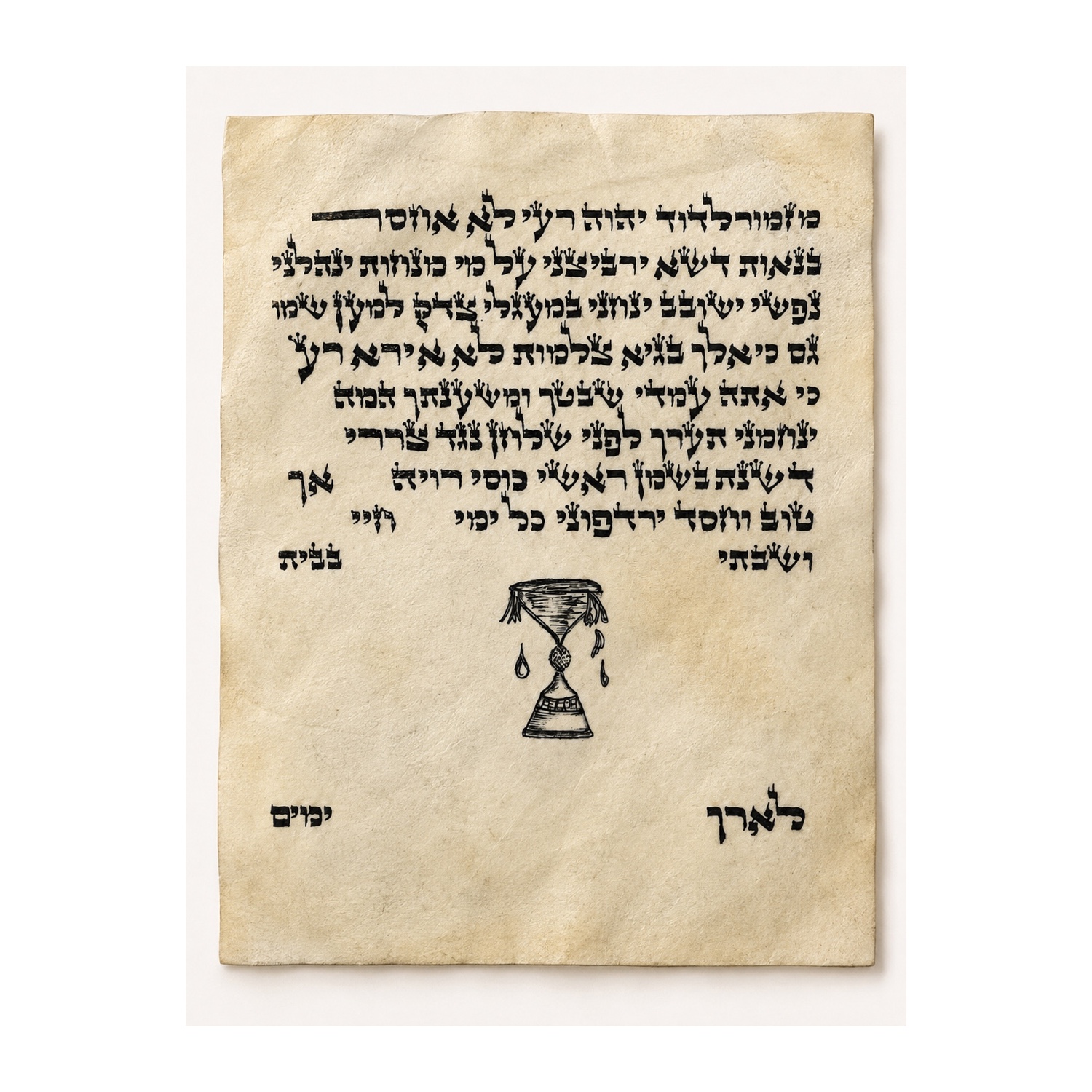
Hebrew text from Psalm 23 is written on parchment around a form that reads as both an overflowing cup and an hourglass.

Parchment Hourglass Study

III. Text, Object, and Body: sacred text against a real thing

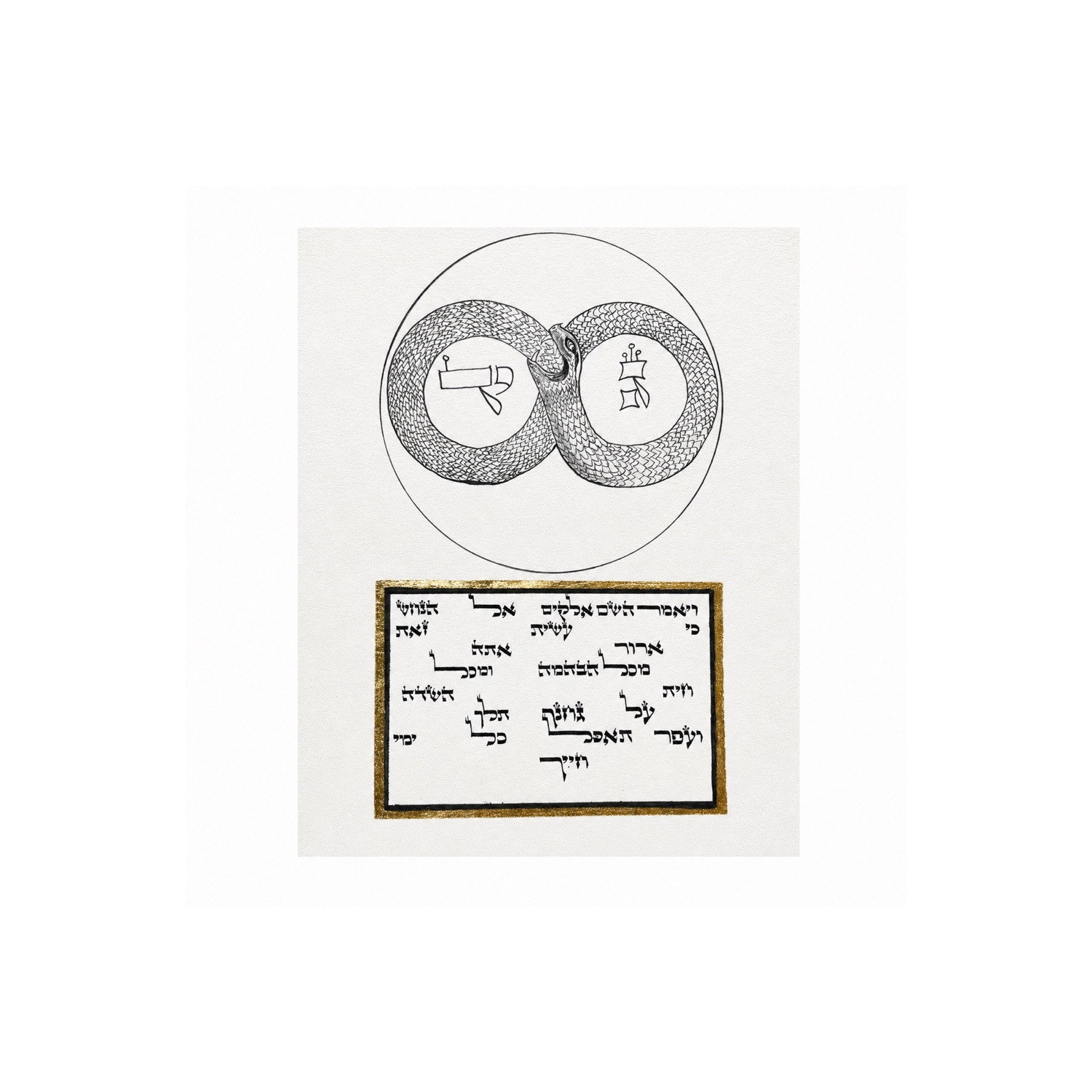
An ouroboros-like serpent forms an infinity symbol above Hebrew text from Genesis 3:14, with the numerals three and fourteen embedded in the loops.

Serpent / Infinity

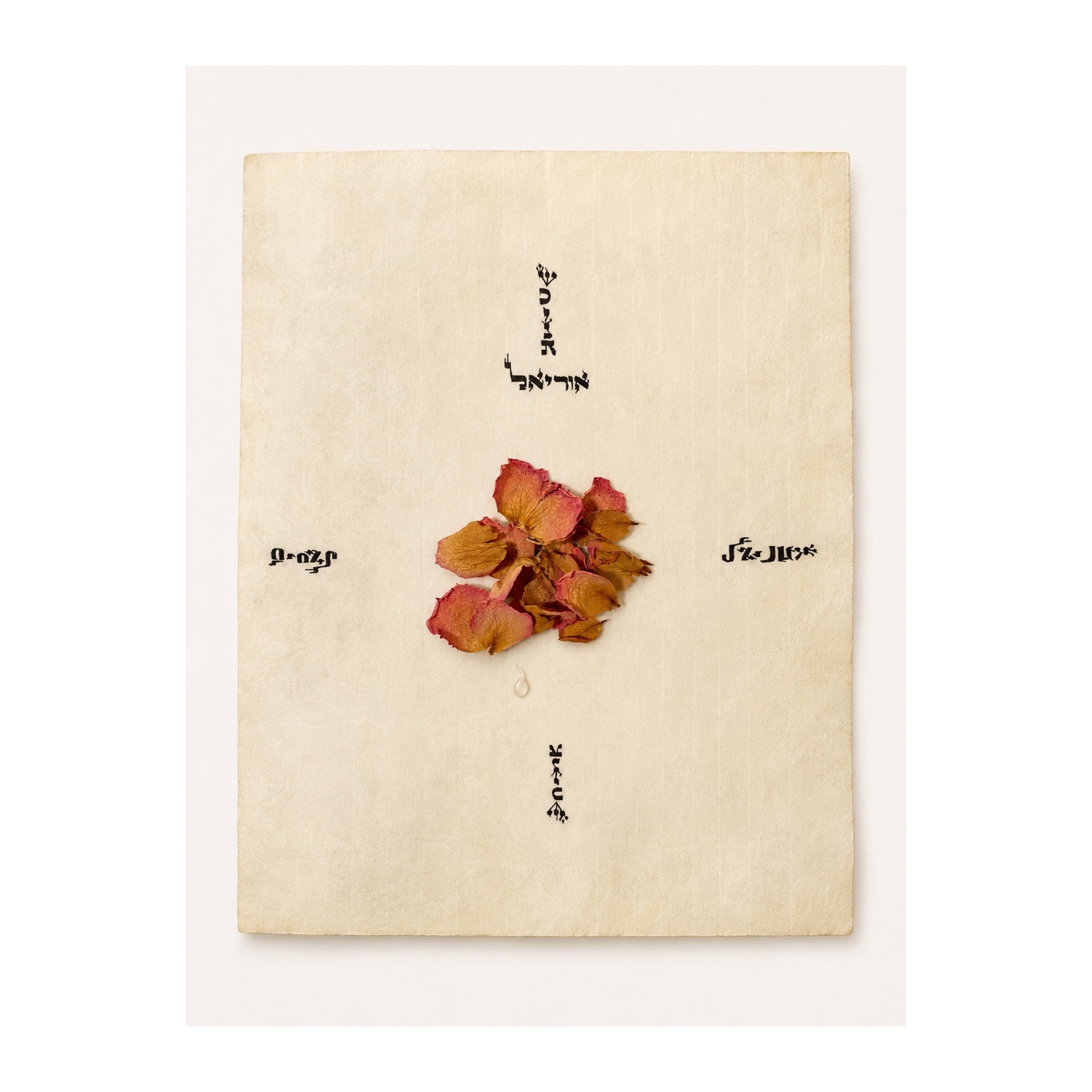
A real dried rose rests on parchment within Hebrew names of four guardian angels; its petals are intentionally decaying.

Rose Petals on Parchment

Botanical Forms begins from a very old Jewish intuition: that Hebrew letters do not only describe creation but take part in making it. In these works, Divine Names become the anatomy of flowers and animals: letters grow as stamens, crowns, petals, vessels, and bodies. The movement runs both ways. A flower could not bloom without the emanation that sustains it, but the Name could not take on a body without the flower. If God is going to be present in the world, then the world has to genuinely exist, and we have to learn to look at it. These pieces ask how an infinite source enters finite forms and how color, sexuality, fragility, and decay answer back.

bottom of page