top of page

Selected Works
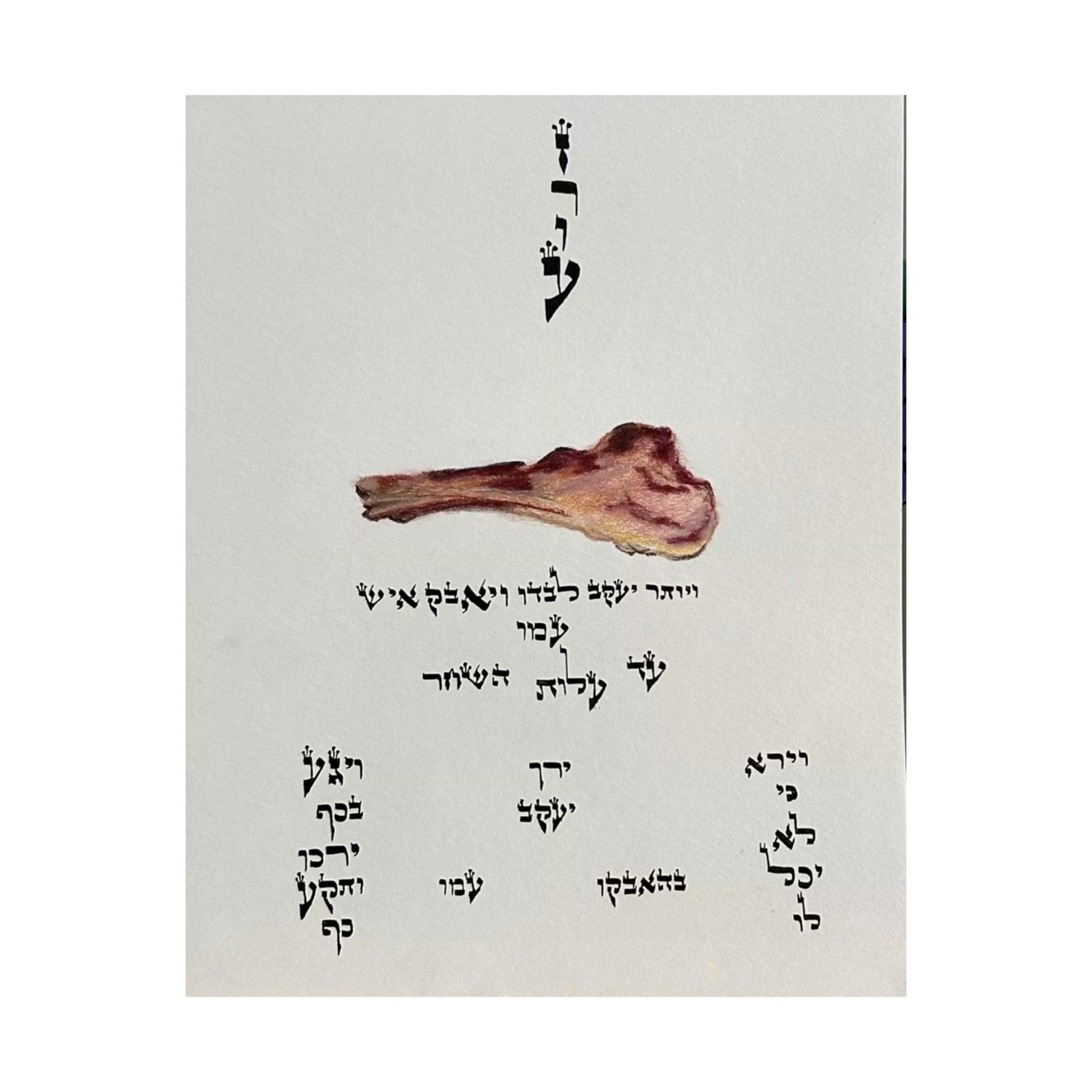
A Passover shank bone is set in conversation with Hebrew fragments from Jacob's night of wrestling.

Zroah

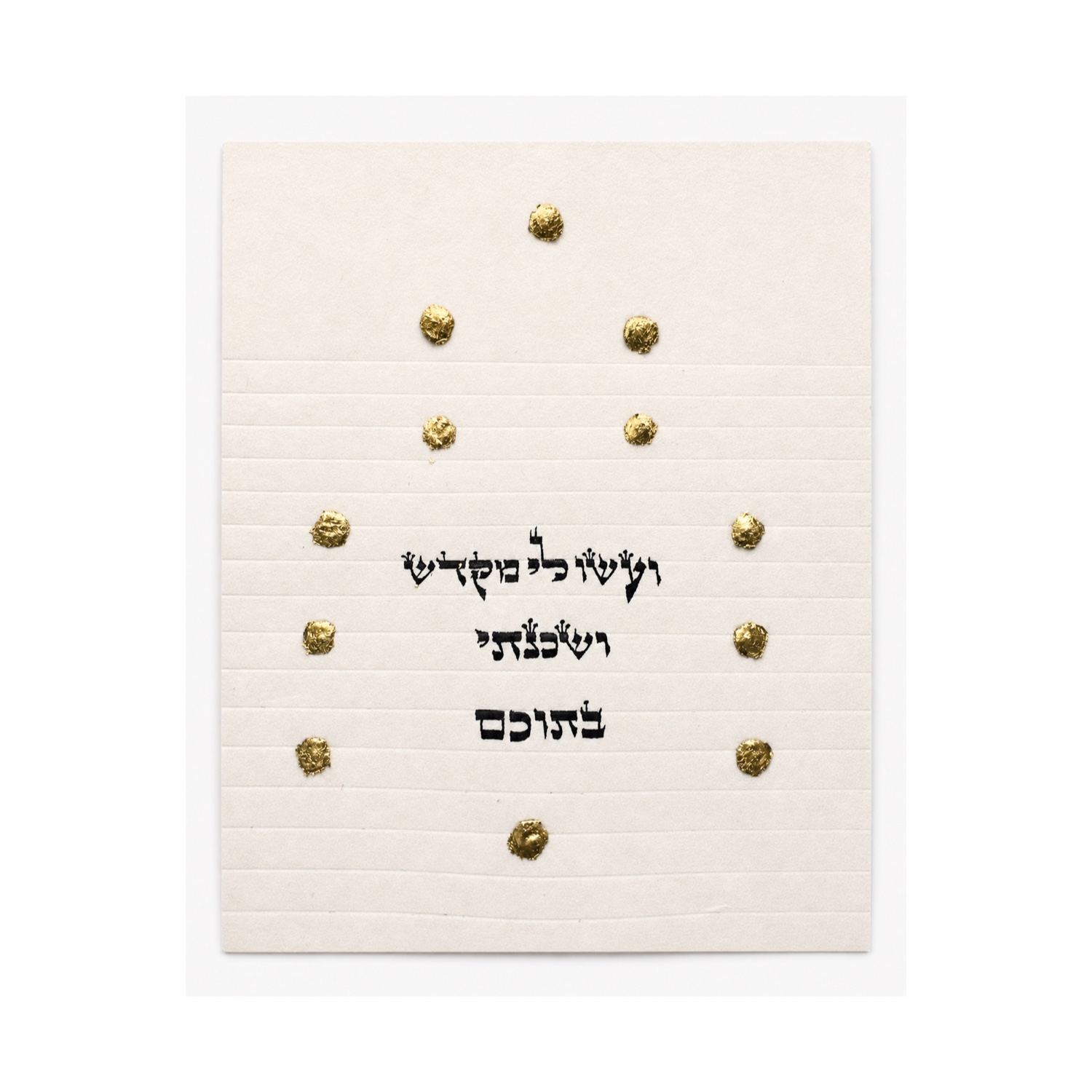
Twelve irregular gold forms representing the tribes of Israel outline the Mishkan on ruled Torah parchment.

Veshakhanti Betokham

A framed diagram of the ten sefirot: nine distinct black crowns within gold circles connected above a textured gold circle for Malchut.

Keter Malchut

Nine native flowers of Israel in gold-framed ovals form a sefirotic tree above a plain gold circle for Malchut.

Native Flowers of Israel

native-flowers-sefirot

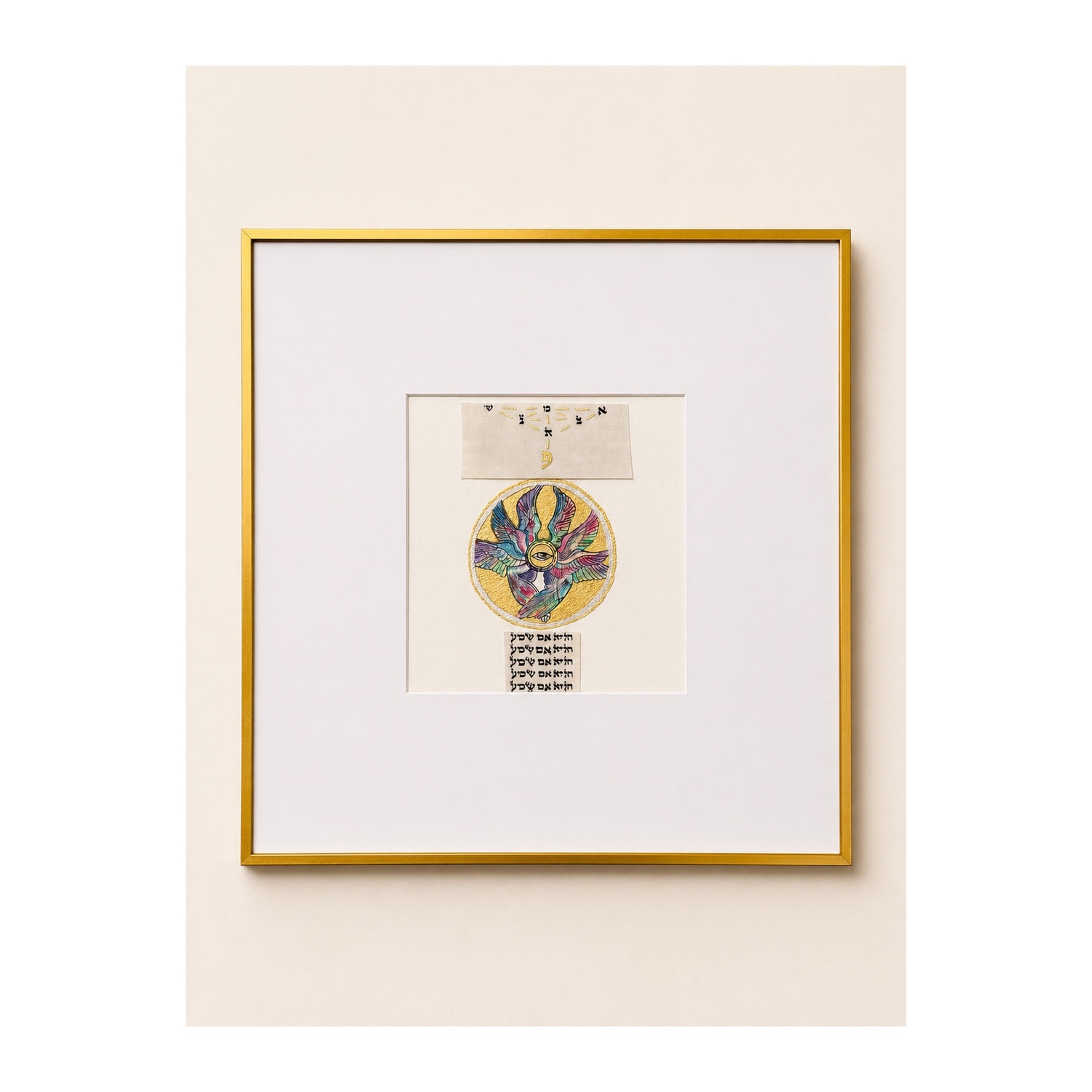
A six-winged seraph with a central open eye stands between descending Hebrew mother letters and repeated words of the Shema.

The Architecture of Listening

Botanical Forms begins from a very old Jewish intuition: that Hebrew letters do not only describe creation but take part in making it. In these works, Divine Names become the anatomy of flowers and animals: letters grow as stamens, crowns, petals, vessels, and bodies. The movement runs both ways. A flower could not bloom without the emanation that sustains it, but the Name could not take on a body without the flower. If God is going to be present in the world, then the world has to genuinely exist, and we have to learn to look at it. These pieces ask how an infinite source enters finite forms and how color, sexuality, fragility, and decay answer back.

bottom of page